
Blog, New News and Articles
Why Are Hotels Switching to Rechargeable Candles?
Aug
Last Updated on Thursday, October 22nd, 2026 by Candles Recharge
Walk into almost any well-designed hotel lobby, restaurant, or spa today, and you will likely notice a soft, flickering glow coming from a candle that never actually burns down. This is not a coincidence. Across the hospitality industry, properties of every size are replacing traditional wax candles with rechargeable candles for hotels, and the shift is happening for reasons that go well beyond style.
This change reflects a broader move in hospitality toward lighting solutions that are safer, more predictable, and easier to manage across large properties. Understanding why hotels are making this switch helps explain where the industry is heading next.
The Shift Toward Flameless Hotel Candles
Open flame candles have long been part of hotel design, used to create warmth in lobbies, dining areas, guest rooms, and event spaces. However, an open flame in a commercial setting carries risks that many properties are no longer willing to accept. Fire codes have tightened in many regions, insurance providers have become more cautious about open flame use, and guests themselves have grown more safety conscious.
Flameless hotel candles solve this problem directly. They use LED technology to recreate the appearance of a real flame, including a soft flicker and warm color temperature, without any burning wax or live fire involved. For hotel operators, this means the visual effect guests associate with candlelight can be preserved without the liability that comes with an actual flame.
What Are Rechargeable Candles for Hotels?
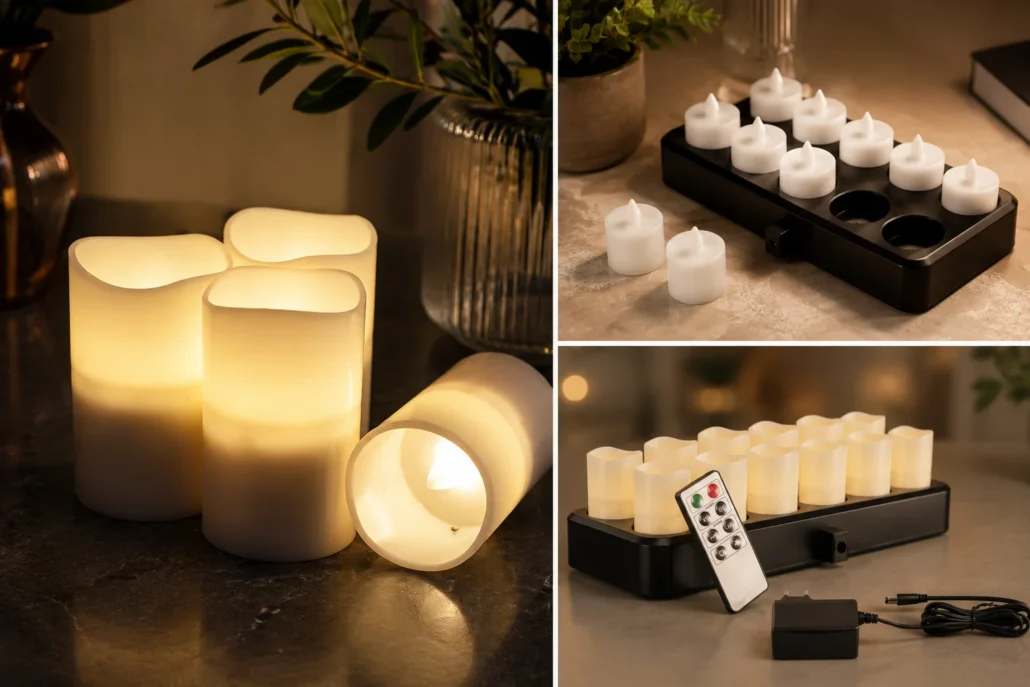
Rechargeable candles for hotels are battery powered LED candles built specifically for repeated, heavy use in commercial environments. Unlike disposable battery candles sold for home use, hotel grade versions are designed to be charged, used, recharged, and reused hundreds or thousands of times.
How They Work
Most rechargeable tea light candles use a rechargeable lithium battery paired with an LED bulb that mimics natural flame movement. Properties typically place these candles on charging bases or trays overnight, similar to how a hotel might charge remote controls or handheld devices. In the morning, housekeeping or facilities staff simply place the fully charged candles back on tables, in hallways, or at reception areas for the day.
This routine fits naturally into existing hotel operations, which is one reason adoption has moved quickly across the industry.
Key Benefits Driving the Trend
Safety and Compliance
The most significant reason hotels are switching is safety. Open flames present a fire risk in guest rooms, near curtains, linens, and furniture, and in areas with heavy foot traffic. Rechargeable candles remove this risk entirely while still allowing properties to maintain the atmosphere guests expect. This also simplifies compliance with local fire codes and insurance requirements, particularly in older buildings or properties with wood paneling and soft furnishings.
Cost and Maintenance Savings
Traditional candles are a recurring expense. Wax burns down, wicks need trimming, and used candles must be replaced regularly, especially in high traffic areas like lobbies and restaurants. Rechargeable candles are a one time purchase that can be reused for years with basic care. Over time, this reduces both product costs and the staff hours spent restocking and replacing burned out candles, a trade-off explored further in this cost comparison of rechargeable versus wax candles.
Consistent Hotel Ambiance Lighting
Guest experience depends heavily on consistency. A candle that has burned unevenly, dripped wax on a tablecloth, or gone out partway through dinner service disrupts the atmosphere a hotel is trying to create. Rechargeable candles maintain the same brightness and flicker pattern every time they are used, which makes it easier for hotels to deliver reliable hotel ambiance lighting across every guest touchpoint, from the front desk to banquet tables. Spas and wellness areas within hotel properties face similar demands, which is why many source their rechargeable tea lights for spa settings from the same suppliers used for guest rooms and dining.
Comparing Traditional vs Rechargeable Candles
| Factor | Traditional Wax Candles | Rechargeable Candles |
|---|---|---|
| Fire risk | Present, requires supervision | None, no open flame |
| Ongoing cost | Recurring purchase and replacement | One time purchase, reusable |
| Maintenance | Wick trimming, wax cleanup | Recharging only |
| Consistency | Varies as wax burns down | Consistent flicker and light output |
| Guest room use | Often restricted by policy | Generally permitted |
| Lifespan | Single use | Hundreds of charge cycles |
Where Hotels Are Using Rechargeable Candles
Hotels are not limiting rechargeable candles to a single area of the property. Common applications include:
- Lobby and reception areas for a welcoming first impression
- In room dining and turndown service
- Restaurant and bar table settings
- Spa and wellness areas where relaxation is a priority
- Event spaces, banquets, and weddings hosted at the property
- Outdoor terraces and patios where wind would otherwise extinguish a real flame
This flexibility is part of why the trend has spread across boutique properties, resorts, and larger hotel chains alike, a pattern also covered in this look at why hotels and restaurants are switching to rechargeable candles across the wider hospitality sector.
What to Look for When Choosing Rechargeable Candles for Hotels
Not all flameless candles are built for commercial use. Hotels evaluating options generally look at a few key factors:
- Battery life and how many hours of use a full charge provides
- Realistic flame movement rather than a static or overly artificial glow
- Charging setup, including whether multiple candles can be charged at once
- Build quality, since hotel candles are handled frequently by staff and guests
- Consistent light color that matches the property’s existing design and lighting
Properties sourcing candles for daily commercial use, rather than occasional home use, typically look for suppliers who understand these operational requirements, including proper charging routines and upkeep, covered in this guide on how to maintain and extend the life of rechargeable candles.
Conclusion
The move toward rechargeable candles reflects a practical shift in how hotels think about safety, cost, and guest experience. By removing the risks tied to an open flame while still delivering the warm, familiar glow guests expect, flameless hotel candles allow properties to maintain their design standards without the ongoing upkeep of traditional wax. As more hotels prioritize both safety and consistent hotel ambiance lighting, this trend is likely to continue growing across the industry. Hotels looking to explore this option can browse the full product range from Candles Recharge or contact us to discuss what would work best for their property.
FAQ Section
1. Are rechargeable candles safe for hotel guest rooms?
Yes. Since there is no open flame, rechargeable candles remove the fire risk associated with traditional candles, which makes them suitable for guest rooms where wax candles are often restricted.
2. How long does a rechargeable candle last on a single charge?
This varies by product, but many hotel grade rechargeable candles are designed to provide a full evening or more of continuous use before needing to be recharged.
3. Do rechargeable candles look like real flames?
Well made flameless candles use LED technology designed to replicate the movement and warm tone of a real flame, so the visual effect is close to traditional candlelight at a glance.
4. Are rechargeable candles more expensive than wax candles over time?
Generally not. While the upfront cost is higher than a single wax candle, rechargeable candles can be reused hundreds of times, which lowers the overall cost per use compared to continually replacing burned candles.
5. Can rechargeable candles be used outdoors?
Yes. Since there is no live flame, rechargeable candles are not affected by wind in the way traditional candles are, making them a practical option for outdoor dining areas and terraces.
