
Blog, New News and Articles
Rechargeable vs Battery Candles: Which Is Better?
May
Flameless candles are a safe and easy option instead of wax candles. They are simple to use and work well in many places. As more people use them, one common question comes up: rechargeable vs battery candles, which is better?
Both types are LED candles, but they work in different ways. They also differ in cost, use, and impact on the environment. This LED candle comparison will explain the main differences, along with the pros and cons, so you can choose what suits you best.
What Are Rechargeable and Battery Operated Candles?
Rechargeable Candles
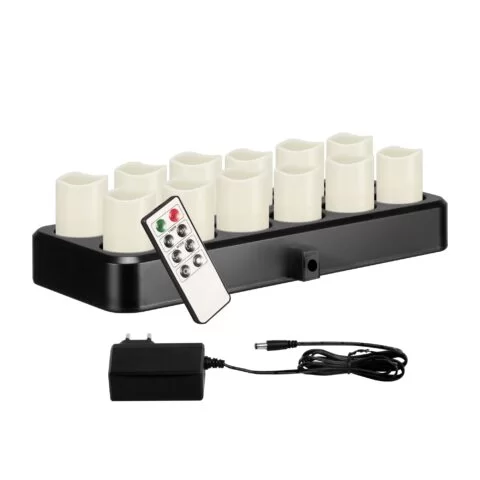
Rechargeable candles use built-in batteries that can be charged multiple times, usually via USB or a charging dock. These are often referred to as battery vs USB candles, with rechargeable models representing the USB-powered category.
They are designed for repeated use and are often chosen for long-term cost efficiency and reduced waste.
Battery Operated Candles
Battery-operated candles rely on disposable batteries such as AA or AAA cells. Once depleted, the batteries must be replaced.
These are widely available and often less expensive upfront, making them a common entry-level choice.
Rechargeable vs Battery Candles: Key Differences
The table below highlights the main distinctions between the two types:
| Feature | Rechargeable Candles | Battery Operated Candles |
|---|---|---|
| Power Source | Built-in rechargeable battery | Replaceable batteries (AA/AAA) |
| Initial Cost | Higher | Lower |
| Long-Term Cost | Lower | Higher due to battery replacements |
| Environmental Impact | More eco-friendly | Generates battery waste |
| Convenience | Requires charging | Requires battery replacement |
| Candle Lifespan | Longer overall | Depends on battery usage |
| Brightness Consistency | Stable output | May dim as batteries drain |
| Ideal Usage | Frequent or commercial use | Occasional or short-term use |
LED Candle Comparison: Performance and Efficiency
Energy Consumption
Rechargeable models are often marketed as energy saving candles because they can be reused hundreds of times. While they consume electricity during charging, the overall energy footprint is typically lower compared to repeatedly using disposable batteries.
Battery-operated candles, on the other hand, require frequent battery replacements, which increases both cost and environmental burden over time.
Candle Lifespan
When evaluating candle lifespan, rechargeable candles generally last longer due to their reusable nature. A single rechargeable unit can operate for several years with proper care.
Battery-operated candles may last just as long physically, but their usability depends on how often batteries are replaced. Over time, the cost and effort of replacing batteries can reduce their practicality.
Flameless Candle Pros Cons
Understanding the flameless candle pros cons is essential when comparing these two options.
Advantages of Rechargeable Candles
- Reduced long-term costs
- Lower environmental impact
- Consistent brightness output
- Suitable for high-use environments
Disadvantages of Rechargeable Candles
- Higher upfront cost
- Requires access to charging
- Charging time may limit immediate use
Advantages of Battery Operated Candles
- Lower initial investment
- Easy to use without charging
- Widely available
Disadvantages of Battery Operated Candles
- Ongoing battery replacement costs
- Environmental concerns due to waste
- Dimming light as batteries drain
Cost Analysis: Short-Term vs Long-Term Value
Initial Investment
Battery-operated candles are typically more affordable at the point of purchase. This makes them appealing for occasional users or one-time events.
Rechargeable candles, while more expensive initially, offer better value over time.
Ongoing Expenses
With battery-operated models, recurring costs add up quickly. Purchasing disposable batteries regularly can exceed the initial savings.
Rechargeable candles eliminate this recurring expense, making them more cost-effective in the long run.
Environmental Considerations
Sustainability is an important factor in the rechargeable vs battery candles debate.
Rechargeable candles produce less waste because they reduce the need for disposable batteries. This makes them a better choice for environmentally conscious users.
Battery-operated candles contribute to landfill waste unless rechargeable batteries are used, which can partially offset the environmental impact.
Use Cases: Which Option Fits Your Needs?
For Home Use
If you use candles frequently for ambiance or decor, rechargeable candles are generally the better option due to their durability and cost efficiency.
For Events and Occasional Use
Battery-operated candles may be sufficient for short-term needs such as weddings or temporary decorations.
Battery vs USB Candles: Convenience Factor
Convenience varies depending on usage patterns.
- Battery-operated candles are ready to use instantly, making them suitable for emergencies or infrequent use.
- USB rechargeable candles require planning for charging but offer greater reliability for continuous use.
In environments where candles are used daily, the need to replace batteries frequently can become inconvenient compared to simply recharging.
Safety and Reliability
Both types are considered safe alternatives to traditional candles, as they eliminate open flames.
However, rechargeable candles often provide more consistent performance, especially in terms of brightness and runtime. Battery-operated candles may experience fluctuations as batteries weaken.
Maintenance and Care
Rechargeable Candles
- Regular charging required
- Avoid overcharging to extend battery life
- Clean charging ports occasionally
Battery Operated Candles
- Replace batteries as needed
- Remove batteries during long periods of inactivity
- Dispose of used batteries responsibly
Trends in Energy Saving Candles
The shift toward energy saving candles reflects broader consumer preferences for sustainable products. Rechargeable technology continues to improve, with faster charging times and longer battery cycles.
Battery-operated candles remain relevant due to their simplicity, but advancements in rechargeable models are gradually making them the preferred choice for many users.
Conclusion
The choice between rechargeable vs battery candles depends largely on your usage patterns and priorities. At Candles Recharge, rechargeable candles are often preferred for their long-term savings, environmental benefits, and consistent performance, making them suitable for frequent use and commercial settings. Battery-operated candles, while more affordable initially, are better suited for occasional use where convenience is a priority.
Both options fall within the broader LED candle comparison, and each has its place depending on the situation. Evaluating factors such as candle lifespan, cost, and sustainability will help determine the best fit for your needs. To explore suitable options or learn more, you can contact us for further details.
Frequently Asked Questions
1. What is the main difference between rechargeable and battery candles?
The primary difference lies in the power source. Rechargeable candles use built-in batteries that can be reused, while battery-operated candles rely on disposable batteries.
2. Which option is more cost-effective?
Rechargeable candles are more cost-effective over time due to the absence of recurring battery replacement costs.
3. Are rechargeable candles better for the environment?
Yes, they generally produce less waste and are considered a more sustainable option compared to disposable battery-operated candles.
4. Do rechargeable candles last longer?
In terms of overall usability, rechargeable candles typically have a longer lifespan since they can be recharged multiple times.
5. Can battery-operated candles be used with rechargeable batteries?
Yes, using rechargeable batteries can reduce waste and ongoing costs, though it may not fully match the convenience of built-in rechargeable systems.
6. Which type is better for daily use?
Rechargeable candles are better suited for daily use due to their efficiency and lower maintenance requirements.
